Can you pay a dental assistant as a contractor?
Why a dental assistant is almost always an employee, what sham contracting is, and what employing a casual properly involves. General information, not legal advice.

Sarah Morrison
5 min read
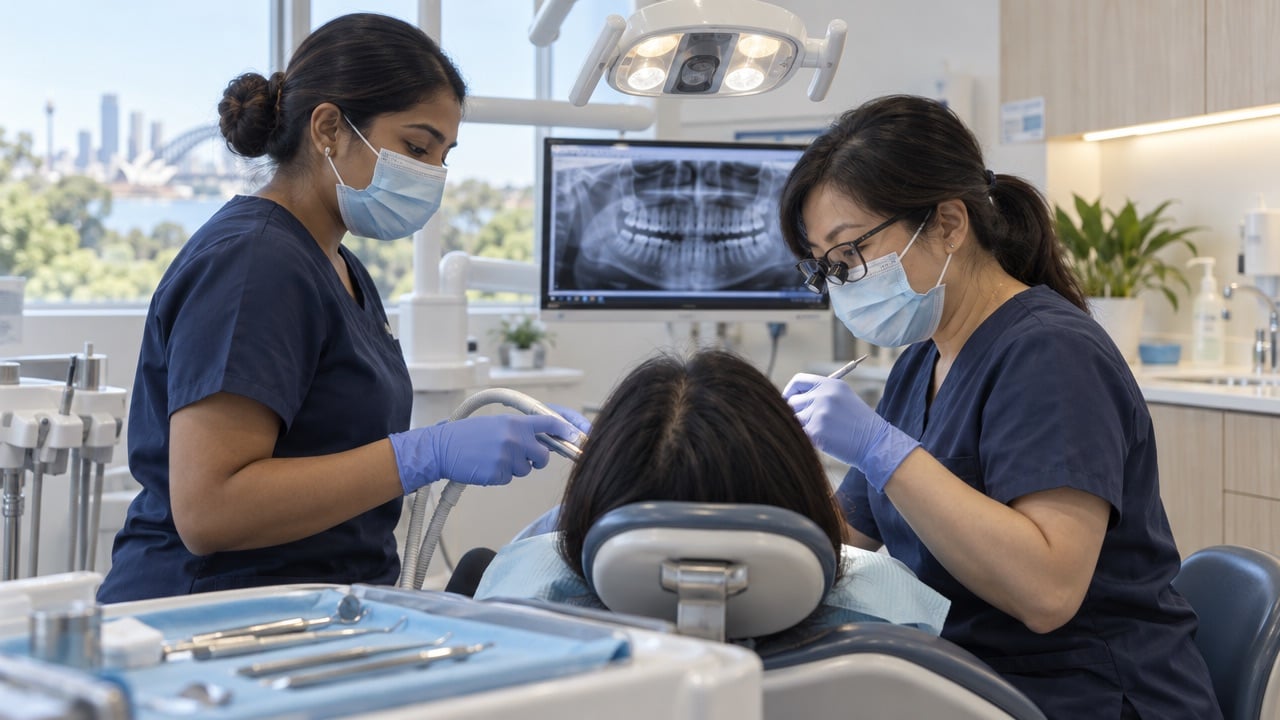
Almost never. A dental assistant working a shift in your clinic, under your direction, with your equipment and paid by the hour, is an employee in law, whatever the paperwork says.1 Calling them a contractor can be sham contracting under the Fair Work Act.2 Employ them as a casual instead: at least the award rate with the 25% casual loading, super, and PAYG withheld and reported through Single Touch Payroll.6
How does the law decide who is an employee?
Since 26 August 2024 the Fair Work Act looks at the real substance and practical reality of the whole relationship, not only what the contract calls it.1 An ABN, an invoice or a signed contractor agreement doesn't settle the question, and neither does whether your clinic calls the role dental assistant or dental nurse. These are the things that do.
| The question | On a typical shift | Points to |
|---|---|---|
| Who decides how, when and where the work is done? | Your clinic: your hours, your dentist, your procedures | Employee |
| Whose equipment and materials? | Yours | Employee |
| How are they paid? | By the hour, for the time worked | Employee |
| Can they send someone else in their place? | No. You booked them | Employee |
| Do they run their own business, with their own clients, risk and profit? | Rarely, for a dental assistant or receptionist | Employee |
| Are they part of your team on the day? | Yes: your patients, your systems, often your uniform | Employee |
What is sham contracting?
Sham contracting is calling someone a contractor when they're really an employee, so their entitlements aren't paid.2 The Fair Work Act also prohibits dismissing an employee to take them back as a contractor, and making a misleading statement to persuade someone to become one.
Since 27 February 2024 the employer's defence is narrower. It has to prove it reasonably believed the arrangement was a genuine contract for services.2 Civil penalties apply for each contravention, and they're higher for serious ones.
What does it cost if you get it wrong?
- Back pay. The award rate, casual loading, penalty rates and overtime for every shift worked.
- Super. Someone paid mainly for their labour counts as an employee for super guarantee even on a contract, so unpaid super attracts the super guarantee charge.5
- Tax. PAYG that should have been withheld, with penalties.
- Workers' compensation. A worker your policy doesn't know about.
- Penalties. Civil penalties under the Fair Work Act, for the business and for people involved.2
What about hygienists and oral health therapists?
The same test applies. Some hygienists and oral health therapists genuinely run their own businesses, with their own patients, equipment and insurance, and a service-fee arrangement can suit them. The label doesn't decide it. The relationship does, so get advice if you're unsure. A shift booked on Cover is always casual employment with your clinic.
What does employing a casual properly involve?
Everything the law asks of an employer, and who does each part when the shift is booked on Cover.
| What the law asks | On Cover | You |
|---|---|---|
| Pay at least the award minimum plus the 25% casual loading, with penalty rates and overtime6 | The rate can't go below the role's Platform minimum, which Cover sets from the award. Penalty rates and overtime are calculated for you to approve | Set the rate, approve the timesheet |
| Give the Fair Work and Casual Employment Information Statements at the start, and the casual one again at 6 and 12 months3 | Given on your behalf, with each acknowledgement recorded9 | Nothing |
| Collect a tax file number declaration | Signed in the app before their first shift with you | Nothing |
| Agree the terms of employment | Recorded in the Casual Employment Contract9 | Read it once |
| Withhold PAYG and report each pay through Single Touch Payroll | Prepared in the weekly pay run | Review and declare each pay run |
| Pay super at 12%, received by the fund within 7 business days of payday (Payday Super, from 1 July 2026)5 | Prepared in each pay run and sent to the fund through Paysense, Cover's payroll engine | Approve each pay run on time. Getting super to the fund within 7 business days is your responsibility as the employer |
| Give a payslip within one working day of payday7 | Emailed to each professional once the pay run's STP report reaches the ATO, the moment you can download the file that pays them | Nothing |
| Keep employee records for 7 years8 | Kept in Cover | Still yours as the employer |
| Cover them under workers' compensation, and induct them safely | Not handled by Cover | Declare the wages to your insurer, run the induction |
| Respond if a regular casual asks to convert to permanent, after 6 months (12 months for a small business)4 | Not tracked by Cover | Reply in writing within 21 days |
Why is employing casuals better for your clinic?
No back-pay surprise
The cost of each shift is known before you approve it, and nothing quietly builds up for a claim years later.
You stay in charge
An employee works your way. You set the standards, direct the work, and can ask the same person back.
Better people say yes
Award rates, super, payslips and workers' compensation are what experienced dental professionals look for.
How does Cover keep it compliant?
Cover is the first dental shift platform in Australia where the clinic employs the casual directly. Every shift on Cover is casual employment between your clinic and the professional. Cover's software does the paperwork that goes with it, and you make the calls an employer has to make: the rate, the timesheet, and the declaration on each pay run.
Questions clinics ask
A dental assistant asked to be paid on their ABN. Is that OK?
Their preference doesn't change the test. If the work looks like employment, it's employment, and the risk sits with your clinic.
Can a casual work the same days every week?
Yes. A casual can work a regular pattern. After 6 months (12 months for a small business) they can tell you they'd like to become permanent, and you can only say no on fair and reasonable grounds.4
Do casuals get leave?
They get the 25% casual loading instead of paid annual and personal leave. They still get unpaid carer's and compassionate leave, and paid family and domestic violence leave.3
Is this legal advice?
No. It's general information, checked against the sources below. For your own situation, talk to an employment lawyer.
Sources
- Fair Work Act 2009 s 15AA; Fair Work Ombudsman, Independent contractor changes
- Fair Work Act 2009 ss 357 to 359; Fair Work Ombudsman, Sham contracting
- Fair Work Ombudsman, Casual Employment Information Statement
- Fair Work Ombudsman, Becoming a permanent employee
- Australian Taxation Office, About Payday Super; Australian Taxation Office, Super for independent contractors
- Fair Work Ombudsman, Health Professionals and Support Services Award 2020 [MA000027], pay guide published 26 August 2026
- Fair Work Ombudsman, Pay slips
- Fair Work Ombudsman, Record-keeping
- Cover, Casual Employment Contract, and Terms of Service section 14
Next review 1 July 2027.
Written by
Sarah Morrison
Sarah worked as a dental assistant for nearly 20 years, much of it covering shifts at other clinics, before she co-founded Cover. She leads Cover's strategy and outreach.